聊天讨论 Is Palaura Legit? A Straight Look at the AI Matchmaker's Privacy, Safety, and the Company Behind It

A consumer fact check: what can be verified about the iMessage matchmaking service, what is a company promise, and what remains unproven.
If you typed "is Palaura legit" into a search engine, you had a good reason. Palaura is a new service that asks for photographs, a voice conversation about your values and dealbreakers, and an ongoing text conversation over iMessage — the kind of personal information nobody should hand over without checking who is on the other end. Caution in this category is well founded: in 2023, the Federal Trade Commission received 64,003 reports of romance scams, according to FTC data.
This guide separates three kinds of claims about Palaura: facts you can verify yourself through public records, commitments the company has published but that no outside party has audited, and things that simply cannot be known yet about a service this new. Where a claim is a promise rather than a proven fact, this article says so.
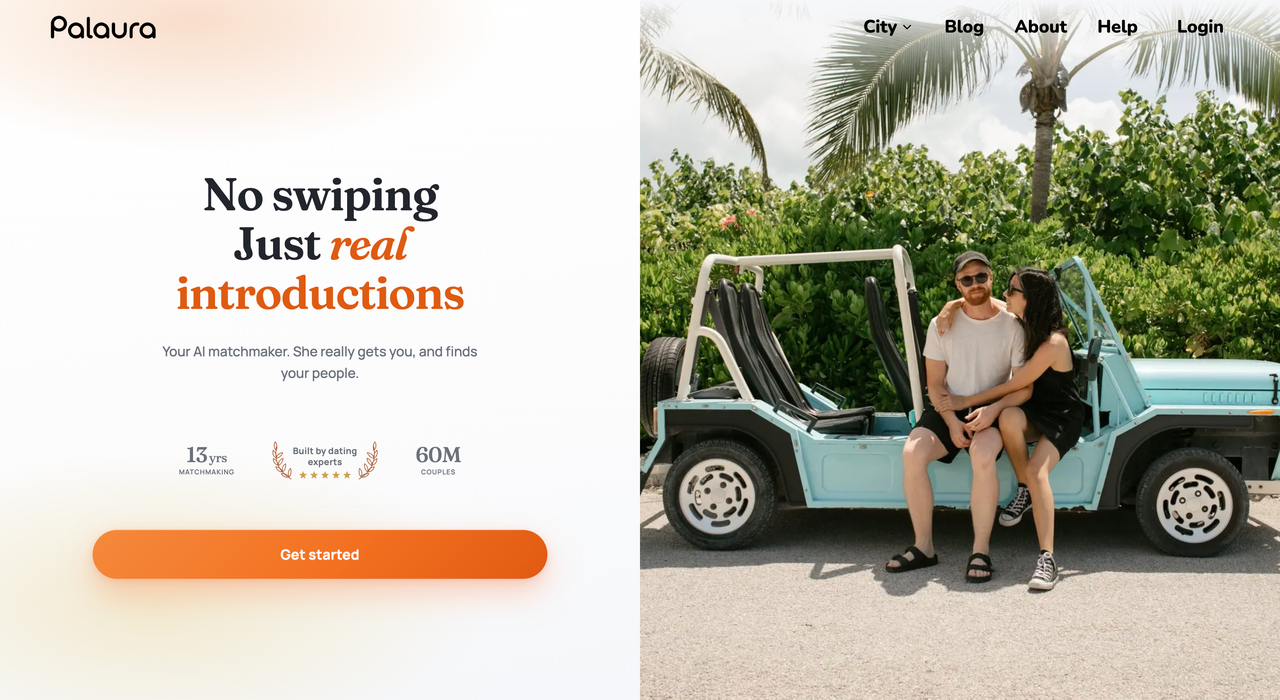
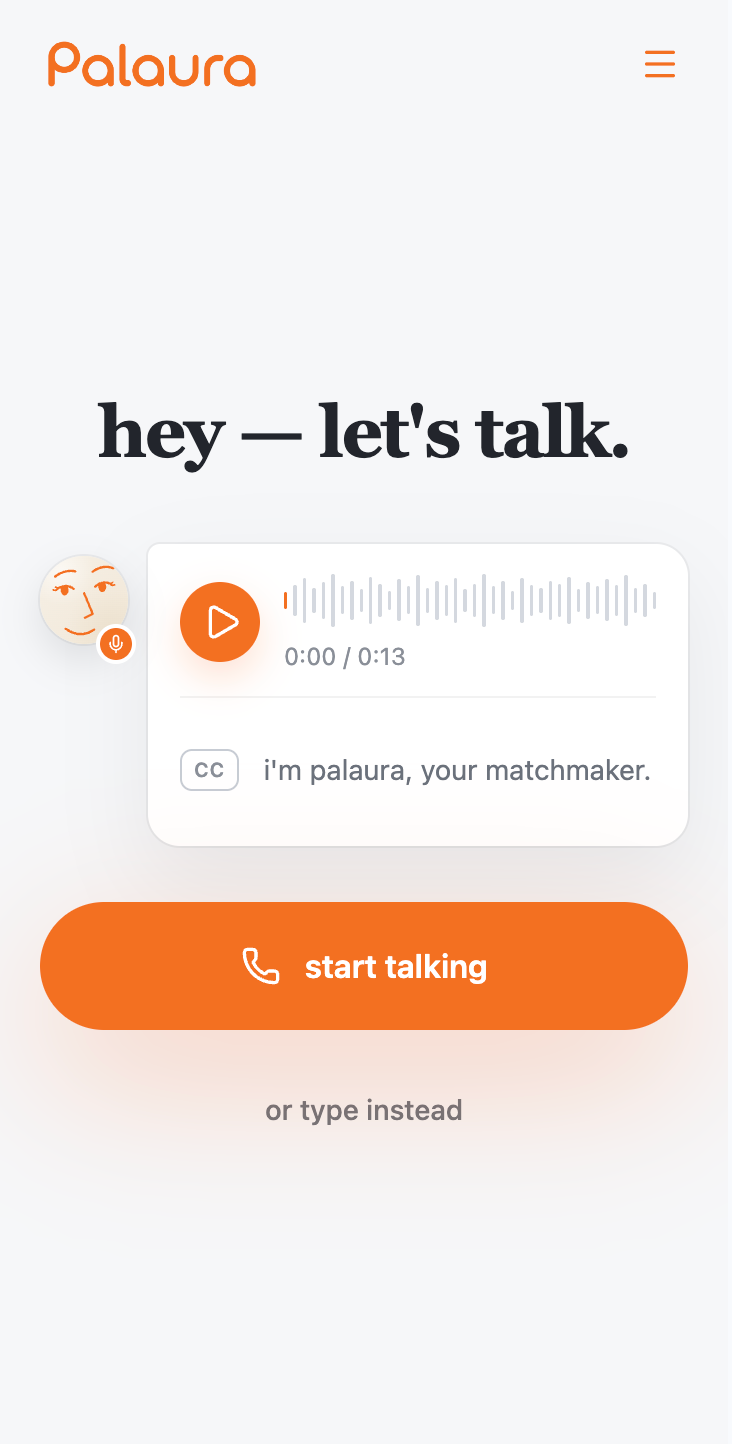
Is Palaura legit? Palaura is an AI matchmaker that operates over iMessage. There is no app to download and no public profile to browse. Users sign up on the web at heypalaura.com, complete an onboarding process, and then interact with an AI — the company presents it as "she" — entirely through text messages. The service went live to the public this summer and is available across the United States; the company's stated coverage is "anywhere you can use iMessage." Several facts about the operation can be checked independently:
- It has a US trademark application on file. A trademark application for "Palaura" has been filed with the United States Patent and Trademark Office. USPTO filings are public records and can be looked up through the office's trademark search system at tmsearch.uspto.gov.
- Payments run through a standard processor. According to the company's privacy policy, payments are processed by Stripe, and card numbers are not stored on Palaura's servers. Stripe is a widely used payment processor; the arrangement means Palaura itself does not hold your card details.
- Its policies are published. The company's privacy policy and terms of service are posted publicly on its site, where they can be read in full before handing over any personal information. Two limits on the word "legit" are worth stating plainly. First, a trademark filing and published policies establish that an identifiable business is operating the service — they say nothing about whether the matchmaking is any good. Second, the service launched this summer, so there is no long-term track record to examine. Neither point is a red flag; both are simply facts about a new product. Who is behind Palaura? Palaura is built by a startup created for the US market. The company does not publish the names of individual founders in its consumer-facing materials, and this article does not name them. The company's own account of the team is as follows: the founders have built dating and relationship apps together for over a decade — thirteen years, by the company's count. It says their previous apps helped over 60 million couples, carry an average user rating of 4.8 stars, and that one of those apps reached number five on App Store Lifestyle charts in multiple countries. In the company's words: "We started Palaura because matching people well is still way too hard, and we think AI can finally make it simple. It's the matchmaker we always wanted to build." Note the sourcing carefully. Those figures — the 60 million couples, the 4.8-star average, the chart position — describe the founders' earlier products, not Palaura, and they come from the company itself. Because the company does not name those earlier products in its Palaura materials, the figures cannot be independently checked from the outside. Treat them as the company's account of its own history. What does Palaura do with your data? Palaura collects more personal information than a typical dating profile requires. Onboarding includes a web signup with basics (age, city, who you are looking for) and a spoken interview that runs somewhere between fifteen and twenty minutes, in which the AI works through what the person values, how fast they want a relationship to move, what they will not accept, and what they are actually looking for — with a written question-and-answer available to anyone who prefers not to talk — plus at least two photos and an ongoing iMessage conversation. That is a substantial data footprint, and it is the core of what a matchmaker of this kind needs to function. The company's published commitments on that data are:
- No selling and no model training. The company states: "We never sell your data or train on it" — meaning personal data is not sold to third parties and is not used to train AI models.
- Deletion on demand. Users can text STOP at any time, and the company states that everything is then erased. (More on this below.)
- Sensitive attributes stay private in matching. Faith, politics, and preferences about children inform the matching process, but the company states that the reasoning shown to the other side never reveals them.
- Contact information is protected. Phone numbers are not exposed when two people are first introduced; early messages are relayed through Palaura, and contact details are exchanged only when both sides agree. Contact information placed in profile bios is blocked.
- Profiles go out only after review. The AI drafts a profile from the onboarding conversation, and the user reviews and confirms it before anything is shown to other people.
Every item on that list is a company commitment, published on its site or in its policies. None has been verified by an independent auditor, and this article found no third-party certification of the company's data practices. That is normal for a company at this stage, but it means the honest answer to "what does Palaura do with your data" is: this is what it says it does, and there is currently no outside party confirming it.
Are the matches real people?
This is the question that separates a matchmaking service from an AI companion product, and Palaura has published a specific policy on it: "She never invents matches; every person she introduces is a real person who is actually looking to meet someone." The company also states that when it has no suitable match for a user, the AI says so and stays in touch rather than padding results with weak candidates.
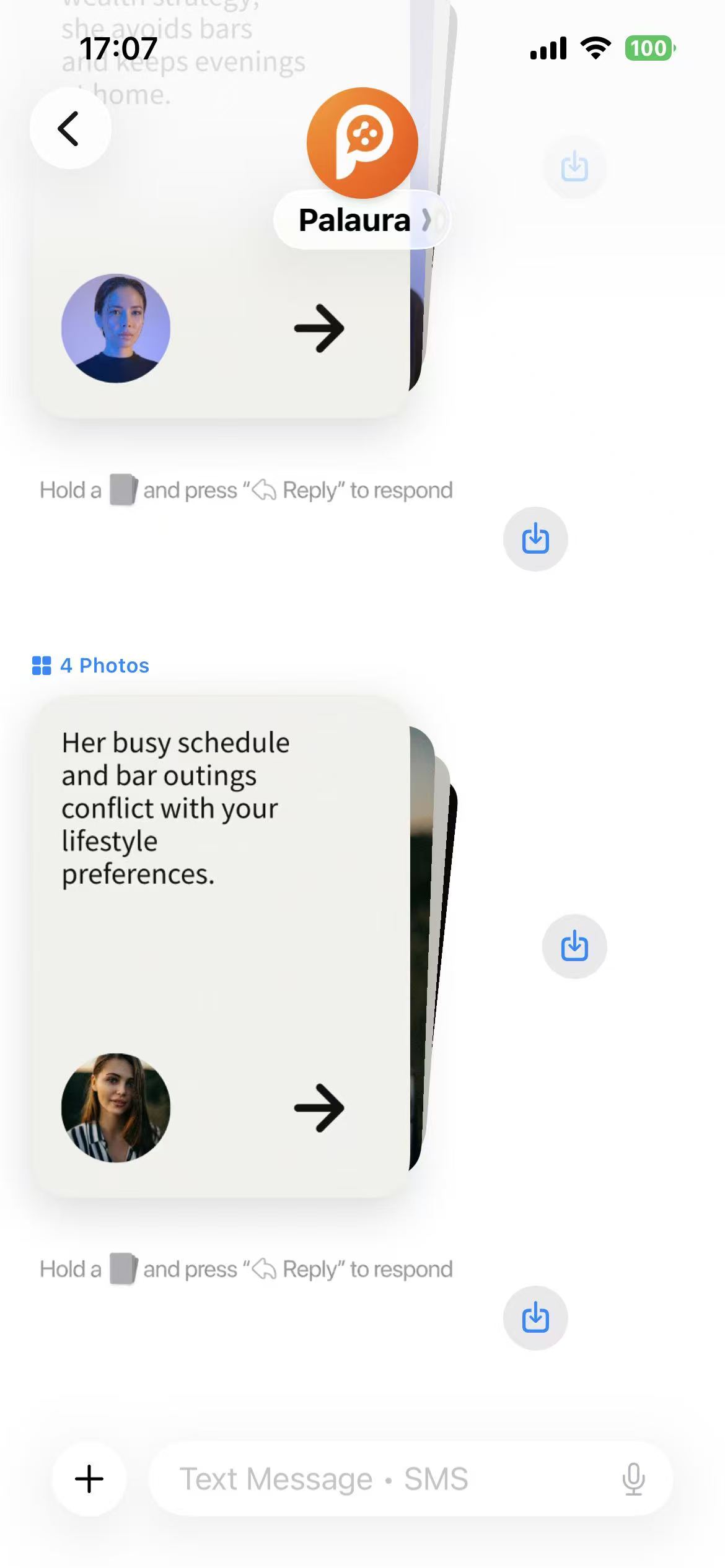
Mechanically, the service delivers a small daily batch of candidates as photo cards in iMessage — a few introductions at most, not an endless feed. The company describes a two-stage screen: a first pass on hard criteria such as mutual age preferences, location, and recent activity, then an AI ranking against what the user said they value and want. When a user expresses interest in someone, the company's account of the next step is that the two users' AI agents hold a conversation of their own, working through seven dimensions of compatibility and ending in a conclusion whose reasons are spelled out. A replay of that exchange is available afterward, and a user who finds their agent got them wrong can coach it into a better representation. A connection between two people happens only if both independently say yes, and there are no group chats.
The no-invented-matches policy is, again, a company commitment. There is no independent audit confirming that every introduced profile corresponds to a registered, active person. What can be said is that the company has put the claim in writing, in unambiguous terms, which creates accountability: a written "every person is real" policy is the kind of statement regulators and consumers can hold a company to. Users should still apply the same judgment they would anywhere else — verify identity before meeting, meet in public first, and be cautious with money under any circumstances.
How much does Palaura cost?
Palaura's stated pricing model is freemium. The company's published line is that "the basics are free. You only pay for premium features," and it describes premium features as "priced to stay affordable." The company does not attach specific dollar figures to that description in its public positioning, so anyone considering a paid tier should check the current prices shown at signup.
Two consumer-relevant points follow from the payment setup described earlier: charges are processed by Stripe rather than by Palaura directly, and Palaura states it does not store card numbers on its own servers.
How do you delete your data?
The published mechanism is a single step: text STOP to Palaura at any time, and the company states that everything — profile, photos, conversation history — is erased.
Two observations. First, this is a lower-friction deletion path than a settings-menu process; it works from the same iMessage thread the service runs in. Second, like the other privacy commitments, the erasure is carried out on the company's side, and an individual user has no direct way to confirm what was deleted from internal systems. The commitment is clear and unconditional as written; its execution rests on the company's word.
The service is restricted to adults: Palaura is 18+ only.
Is it safe to talk to an AI about your love life?
There is no universal answer, but the question can be broken into its parts.
What you disclose. Palaura's onboarding is designed to draw out exactly the information most people consider private: values, religious views, political leanings, feelings about children, past relationship patterns. If the company's commitments hold — no selling, no model training on personal data, deletion on request — the exposure is limited to the company itself and the people it introduces you to. If you are not comfortable relying on those commitments, that is a legitimate reason not to use the service.
Who can see you. There is no public profile and no browsable directory. Your profile is shown to specific candidates the system selects, sensitive attributes are excluded from the reasons shown to others, and your phone number stays hidden until both people agree to connect. Structurally, that is a narrower exposure surface than any format where profiles are open to browsing.
What the AI gets wrong. An AI representing you can misrepresent you. Palaura's design acknowledges this: nothing goes out before the user reviews and confirms the profile, agent-to-agent conversations can be replayed and read, and users can correct the agent when it gets something wrong. Those controls do not make errors impossible; they make them visible and correctable.
Who the service is for. The company states the service is inclusive: "Palaura is for anyone looking for a real connection, including LGBTQ+ users."
The bottom line
Verifiable: Palaura has a US trademark application on public file at the USPTO, payments are handled by Stripe, and its privacy policy and terms are published for anyone to read. Committed but unaudited: no data sales, no AI training on personal data, text-STOP-to-erase deletion, no invented matches, mutual consent before any connection. Unknown: long-term track record, since the service launched this summer.
By the ordinary consumer definition — a real company, checkable public records, standard payment handling, written policies with a deletion path — Palaura is a legitimate business rather than a scam operation. Whether its promises are kept over time is something no article can certify in advance, and the company's own materials, to their credit, do not claim otherwise. Anyone weighing it should read the current policies at heypalaura.com and decide with the distinction in mind that this guide has tried to keep sharp: what is on the public record, and what is, for now, a promise.